President of RJLL Drilling
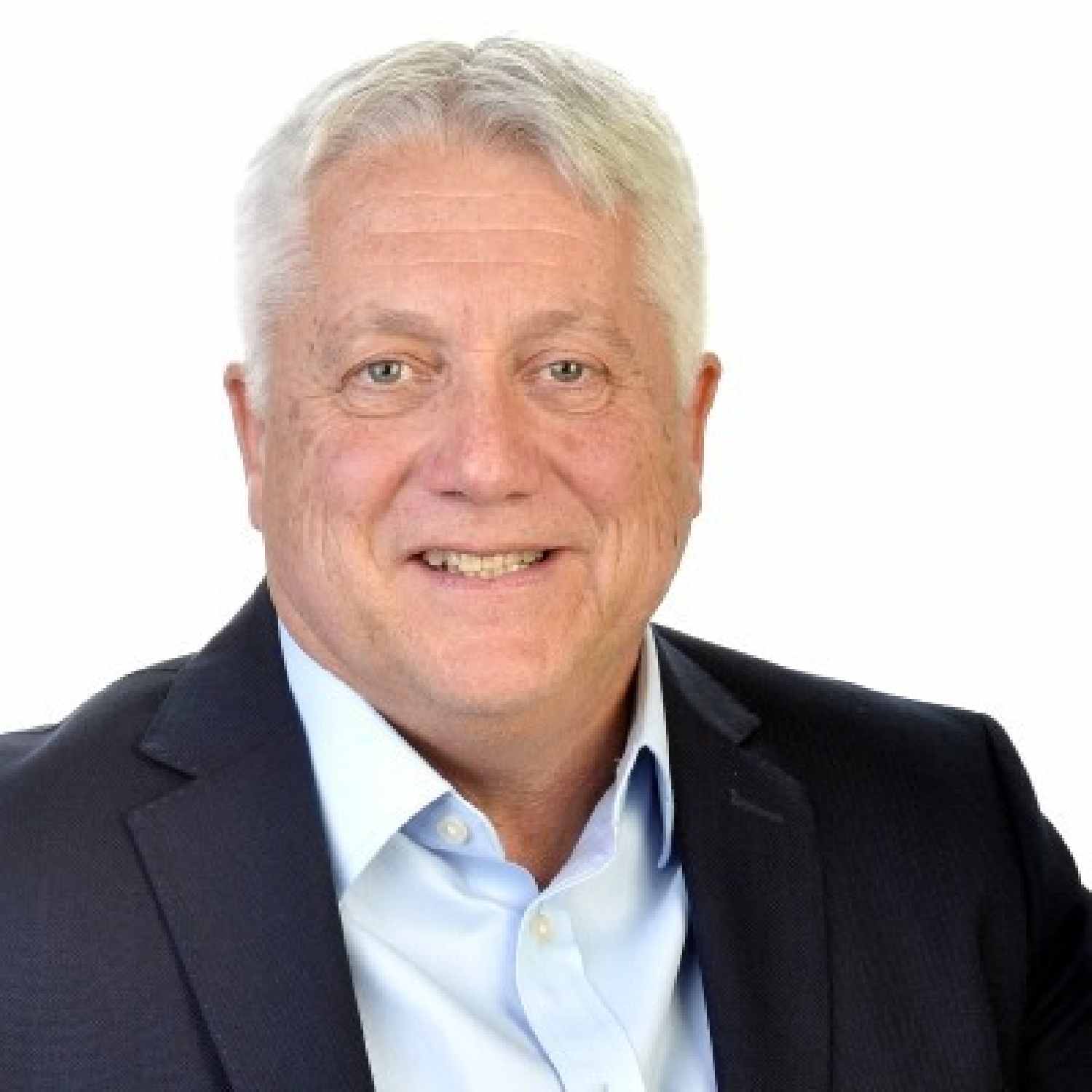
David Bradley started his drilling career in 1988 working as a helper and then as a drill rig operator for the family business Bradley Brothers. At the age of 30, he became the company’s Co-owner and VP of Operations; by then, Bradley Brothers was a globally recognized drilling contractor with a broad international presence and a workforce of 1200 people.
When the family business was sold in 2011, David spent the next nine years as a Co-owner of a management consulting firm.
Today, he is a partner in and President of Canadian RJLL Drilling, which specializes in wedges, directional drilling, and complicated projects. RJLL is committed to providing high-quality service under the industry’s best safety practices.
Grigor Topev: David, thank you for agreeing to participate! We are excited to learn more about you and RJLL Drilling. But let’s start at the beginning: how did you start your career in drilling? Tell us the story.
David Bradley: I started working in the family business in 1988. At the time, I was only 13 years old, but I was already six feet (1.83 m) tall and weighed more than 240 lbs (109 kg). After seeing my brother leave for several summers to work on drilling projects, I wanted to do exactly what he was doing. I finally convinced my father to let me go. I started by driving muskegs and supplying the drills with equipment and tools. I was also responsible for preparing access roads for the water lines. By the end of that summer, I knew that one day the family business would be mine!
I worked there every summer from 1988 to 1995 as a helper. In 1995, after completing my college education in administration and my third year of football at John Abbott College in Montreal, Canada, I returned to Rouyn-Noranda and explained to my parents that I wanted to work full time as a driller for the family business.
Grigor Topev: Any good/funny memories from those early years you would like to share with us?
David Bradley: At 13 years old, as I said, I was six feet tall and weighed 240 pounds (109 kg). After my summer work, I lost 45 pounds (20 kg)!
Grigor Topev: Tell us more about the famous Bradley Brothers. I’d love to hear about it firsthand. What was the size of the company before the sale to Major Drilling in 2011? How many projects, drill rigs, team members? Roughly, what was the meterage achieved per year?
David Bradley: My grandfather, Edgar Bradley, and his four brothers started the business in 1942 with a man named Mr. Jones. The company was incorporated as Jones and Bradley Drilling Contractor.
In 1944, my grandfather caught Mr. Jones stealing. He assessed the value of Mr. Jones’ shares, subtracted the amount stolen, and paid Mr. Jones the difference to buy all his shares. At that time, all transactions between customers and suppliers were made in cash, so access to money was very easy. Following this transaction, the company was renamed Bradley Bros Ltd.
My father, Wallace Bradley, started working for the company in 1952, at the age of 11, as a cook’s assistant in the camps during the summer. After finishing high school at St. Michael’s in Toronto, my grandfather sent him to Colorado to study for a Bachelor of Engineering degree. However, after only one year, my father came back and told his father that he preferred to work as a driller. Gradually, he took the reins of the company and eventually bought my grandfather’s shares in 1968, at the age of 27, with the primary objective of modernizing the drill and equipment inventory, which was in dire need of replacement.
In 2011, Bradley Brothers had operations in Canada, Peru, Colombia, Suriname, Mexico, and the Philippines. We had 145 drills in operation and drilled 1 500 000 m (4 921 260 ft) per year.
Grigor Topev: Walk us through how you joined RJLL.
David Bradley: RJLL was founded in 2014 by Réal Lemoine and Jérôme Lefebvre. I joined them as a partner in 2020. Since then, RJLL has grown to operate 47 surface drilling rigs. Our next objective is to develop underground drilling. The success of our company is directly tied to the quality of our teams. Réal and Jérôme, who had previously been operational leaders at Bradley Brothers Canada, were able to develop outstanding workers, most of whom chose to return to work with RJLL because of the quality of the leadership and the organizational culture.
Grigor Topev: What are RJLL’s main projects now? We’d love to hear the highlights.
David Bradley: Of our 47 drills, 32 are on long-term contracts in Ontario and Québec. As of today, we have 44 drills in operation.
Grigor Topev: Over the past two years, we had tariffs, war, and the Canadian elections. Without going into the politics, what changes and challenges did the company face? How did you respond to them?
David Bradley: Our consumable prices increased significantly in 2026, by more than CAD 7.00 per meter, or 35%. This does not include fuel costs or increased labor costs due to demand.
Grigor Topev: RJLL was featured in Coring’s In Focus article nearly three years ago (read the article here). For future goals, you mentioned hoping to get to 20 surface and ten underground rigs. What are your next goals?
David Bradley: Developing our underground operations is still part of the plan, and we would also like to develop operations abroad.
Grigor Topev: What legislation, requirements, or standards would you like to see changed to improve the drilling industry in Canada?
David Bradley: I would like to see the industry apply the same safety standards across the board. RJLL always applies best practices on every contract, and if a customer brings RJLL to a higher level, we apply those standards to all our operations. I would like the industry to encourage and support contractors that truly invest in safety.

Grigor Topev: How big is the problem of getting new hands into the industry?
David Bradley: It is not easy, but with a strong training program and a good mentorship program, we are able to attract and bring new blood into the drilling industry. Still, this remains one of the biggest challenges the industry is facing.
Grigor Topev: Following on from that, what, if anything, should the industry do to attract more young people to drilling?
David Bradley: The industry should promote drilling as a skilled, rewarding career with real opportunities for growth. We need to invest in training, mentorship, safety, and modern technology to show young people that drilling is not only physically demanding work, but also a profession where they can build a strong future.
Grigor Topev: Going back to the expansion of RJLL’s drill fleet, what would be your feedback for manufacturers? What should they focus on, and what are the features and requirements every new rig should match and exceed?
David Bradley: Manufacturers are working on drill automation and autonomous drills. I believe they should keep simple and practical electronics in mind to minimize downtime. For example, if I have a drill in northern Canada and my supervisor cannot repair or troubleshoot it because it requires a technician, that is not practical for us.
Still, I believe this is the way forward for safety, productivity, and cost efficiency.
They should also carry more inventory during this super-cycle to better support operations.
Grigor Topev: Tell us more about your experience with the super-cycle. How has it affected RJLL’s business?
David Bradley: Since November 2025, we have felt the industry entering a super-cycle phase. This means that significant financing has been completed and continues to take place, creating a major impact on the drilling industry.
From the outside, it may look positive to be as busy as we are; however, drilling contractors are being hit very hard by rising consumable and labor costs. This impacts contractors directly, while also increasing drilling costs for exploration and mining companies.
The impact of the super-cycle on RJLL, particularly from a management perspective, has been even more challenging than COVID.
RJLL has been very well supported by its customers, who have given us the opportunity to adjust our pricing to reflect cost increases over which we have absolutely no control.
This requires a great deal of transparency and open communication between the mining company and the drilling contractor. There is a fine line between increasing drilling costs to cover unexpected increases caused by the super-cycle and taking advantage of the situation. RJLL has always worked with this principle in mind: we aim to adjust pricing only to cover unforeseen cost increases, not to profit from the situation.
Grigor Topev: How does RJLL test and adopt innovations, whether it is new drilling software, equipment, or tools? What criteria does the company use?
David Bradley: As of today, we are working with a few suppliers, and even with a customer, to collect and compile data that can help develop AI technologies for the drilling industry. For now, we use our suppliers’ technologies, but a major technological change needs to happen in our industry.
Grigor Topev: Going from the previous question, what is a common piece of drilling equipment or tool that you think is overdue for innovation, or you just cannot believe hasn’t been improved or reinvented yet?
David Bradley: Other than automation, which has already started, and applying AI to our drills, being able to change the bit without pulling the rods would be a major step forward. It has been tried before, but there has not yet been a successful solution.
Grigor Topev: What about directional drilling, my favorite topic? What does RJLL adopt in terms of wedging and directional drilling?
David Bradley: RJLL performs steel wedge and retrievable wedge installations. We also do directional drilling, and 50% of our drills are using directional drilling.
Grigor Topev: How will the industry be evolving? Will we see any AI implementation in a physical profession like ours?
David Bradley: Yes, I believe AI will become part of the drilling industry, even in a very physical profession like ours. It will help improve safety, planning, data analysis, productivity, and decision-making in the field.
Grigor Topev: What would be your advice to a person in a drilling management role?
David Bradley: Take care of the people working in this industry, especially the men and women in the field. They sacrifice time with their spouses, families, and friends to put bread on the table. As management, we need to pass on our passion. Even if this work pays well, without passion, we will not prevail.
Grigor Topev: What do you do in your free time?
David Bradley: I spend time with my wife and family, and I enjoy fishing, hunting, and anything related to the bush.
Grigor Topev: Any parting words for our readers?
David Bradley: Stay safe and keep your teams safe!
For more information: Get in touch with David on LinkedIn