Introduction
Successful drilling is measured by more than just meters drilled. It is also measured by how effectively information moves between the field, the office, and the client.
Yet in many drilling operations, critical information still travels through paper reports, spreadsheets, emails, phone calls, and text messages. As projects become larger and more complex, keeping everyone aligned becomes increasingly difficult.
The challenge is no longer collecting information; it is ensuring that everyone is working from one source of operational information. This is precisely what led to the creation of Lantern Drilling Software.
Built on real drilling experience
Now offered as part of Pilot & Co’s product portfolio, Lantern software was originally developed from an internal platform created and used by a successful diamond drilling contractor. It was born from real operational experience, not from a software company looking for a new market.
The platform was built by people who understood the realities of remote drill sites, changing conditions, and the daily pressure of delivering accurate information while keeping crews focused on drilling.
From the beginning, the vision was simple: capture operational information once, at the source, and create one shared record that could follow the project from the drill site to the office and ultimately to the client.
The workflow: One source of operational information
Every drilling project generates hundreds of operational data points every day. For example:
- Who was on shift?
- How many meters were drilled?
- What caused downtime?
- Which equipment was used?
- What activities were completed?
Individually, these details may seem routine. Together, they tell the story of a drilling project.
Traditionally, this information is captured on paper, transferred into spreadsheets, shared through emails, discussed over phone calls, and often recreated several times before reaching the office or the client. Each manual step introduces the possibility of delays, inconsistencies, or duplicate work.
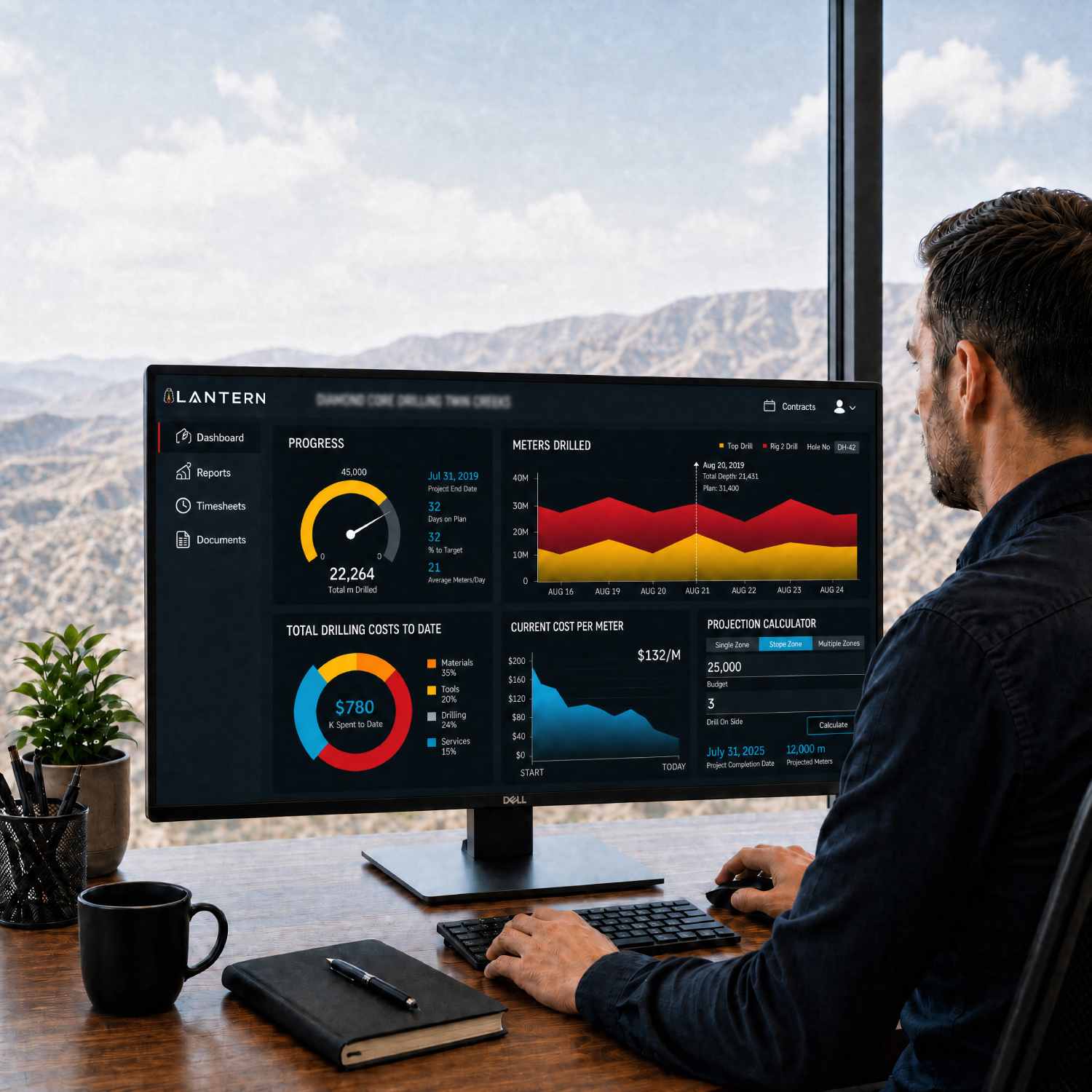
Lantern approaches the challenge differently. Information is captured once at the source and remains connected throughout the workflow: from the drill site to the client. Field crews record daily shift information—including time, meters drilled, activities, equipment use, and downtime—directly in the platform. The administrative team reviews and validates the record, while clients can review the information and request any necessary corrections before approval.
Once approved, the same operational record supports invoicing, payroll, reporting, and project oversight without requiring information to be re-entered or reconciled across separate records. This gives field crews, supervisors, office teams, and resource companies access to consistent information, with user roles ensuring that each person can access the data and functions relevant to their responsibilities. It also reduces the unnecessary emails, phone calls, report revisions, and delays that occur when each stakeholder is working from a different version of the same project data.
This connected workflow ensures that operational information moves consistently from the drill site to supervisors, the office, and ultimately to the client.

More than digital forms
Many digital solutions replace paper forms with electronic versions. Lantern was designed with a broader objective: to connect the entire flow of operational information.
For drilling contractors, this means less time entering data, reconciling reports, responding to information requests, and validating completed work. For resource companies, it means clearer visibility into project progress, reported activities, costs, and invoices.
The objective is not to change how drilling is performed. The expertise of the driller, the judgment of the supervisor, the experience of the geologist, and the decisions of the project manager remain at the heart of every successful drilling program. Lantern supports these roles by making the information behind their decisions accurate, accessible, and easier to share.
As drilling programs grow, so does their operational complexity. Multiple rigs, rotating crews, remote locations, evolving client requirements, and larger project teams all increase the volume of information that must be managed every day. In these environments, operational efficiency depends not only on drilling performance, but also on how quickly reliable information can move between the people supporting the project.

Simple. Practical. Built for the drill site.
One of Lantern’s greatest strengths is its ability to simplify operational complexity.
Every additional click, unnecessary field, and administrative task takes time away from the work that creates value. Designed with input from drilling professionals, the platform reflects the realities crews face every day, including remote locations, changing conditions, demanding schedules, and the need to provide timely information to clients.
By making information easy to capture and share, Lantern allows teams to spend less time managing paperwork and more time managing operations.
Continuous improvement and long-term flexibility
Lantern continues to evolve through feedback from drilling contractors, field crews, office teams, and resource companies. Its development roadmap also includes expanded API capabilities so that Lantern can connect more easily with accounting, payroll, ERP, and client reporting systems. This focus on interoperability will give customers greater flexibility and help information move securely between the different technologies supporting a drilling project.
‘Continuous improvement is central to how we develop Lantern because operational needs and technology never stop evolving. Some companies fall into the trap of believing that building their own system will provide greater control or cost less, but they often underestimate the long-term impact. A digital platform requires ongoing development, maintenance, cybersecurity, user support, and integration. Internal teams can quickly find themselves managing software instead of focusing on their drilling operations,’ said Fiona Pinnell, Chief Growth Officer at Lantern.
The practical impact
The value of better operational information extends far beyond administration.
When field information is captured accurately and made available across the operation, supervisors gain faster visibility into daily activities, office teams spend less time reconciling reports, and resource companies receive clearer information to support project decisions.
Resource companies found that the real-time transparency offered by Lantern allowed them to optimize their budget and, in some cases, drill more meters while remote projects were unfolding.
Contractors using Lantern have reported benefits including:
- Decrease of invoice discrepancies requiring clarification: from approximately 20% to virtually none;
- A shorter service-to-cash cycle to improve cash flow;
- Decrease in time spent consolidating daily field information: from nearly 50% of the operations manager’s workday to less than 10%;
- Less time spent reconciling reports and more time supporting field operations.
These improvements demonstrate that better information does more than just reduce paperwork. It supports faster decisions, stronger collaboration, and greater confidence throughout the project.
Customer success story:
Turning better visibility into better decisions
Forage Fusion Drilling is a well-established Canadian drilling contractor operating across Canada. Like many drilling contractors, the company wanted to reduce its administrative burden and make communication between the field, the office, and its clients easier and more organized. The goal was to give each stakeholder access to the reliable, up-to-date operational information they needed to work efficiently, while allowing the drilling team to stay focused on what brings the most value to its clients: core samples in the box.
‘After implementing Lantern, our reporting became significantly more streamlined. Information captured at the rig was immediately available throughout the organization, eliminating much of the manual effort required to compile reports, answer client questions, and reconcile operational records. Instead of spending valuable time tracking down information, our team focused on supporting active drilling operations,’ said Mike McTavish, President and Owner of Forage Fusion Drilling.
The biggest change, however, was not simply faster reporting. It was better operational visibility.
‘With timely access to trusted field data, our operations managers have a clear understanding of what is happening across our drilling programs as the work progresses. Decisions that previously relied on delayed reports or multiple phone calls can now be made with confidence using current operational information. That visibility has improved communication with our clients, reduced administrative overhead, and helped keep projects moving without unnecessary delays,’ added McTavish.
Forage Fusion’s experience demonstrates that the greatest value of connected operational data isn’t replacing paper; it’s giving every stakeholder the confidence to make better decisions while the work is still happening.
Better information. Better collaboration. Better drilling.
Today’s drilling projects generate more operational information than ever before and represent the most expensive activity for a resource company. The challenge is turning that information into a reliable record that everyone can use.
As exploration programs continue to grow in scale and complexity, timely information is becoming increasingly important. Contractors and resource companies that work from a shared operational record are better positioned to improve communication, strengthen collaboration, and respond more quickly to the realities of the field.
At the end of the day, the objective is simple: give the right people accurate information when they need it. When the field, the office, and the resource company remain connected, decisions can be made faster, approvals become easier, and drilling teams can stay focused on delivering value to their clients.
For more information: Visit pilotnco.com or email info@drillwithlantern.com