Director of Power Metallic
Steve Beresford is an exploration geologist based in Perth, Western Australia. He is an ex-university Professor at UWA (and lecturer at Monash University), ex-Chief Geologist of three major mining companies, part of the WMC mafia, and founder and advisor to numerous junior metal explorers.
Steve’s focus is polymetallic Ni-Cu-PGE deposits with companies in Canada, Central Asia, and Europe. His field experience spans across 70 countries, and he has worked on the majority of the world’s nickel sulfide camps and explored on six continents. Steve has been involved in a few major initiatives, such as co-authoring UNCOVER and Australia’s decadal plan for Earth Sciences, and two major discoveries, but these days he tries to just walk the talk. He’s also on the board of Power Metallic, which is in the middle of a polymetallic Cu-PGE discovery in Quebec.
Brett Davis: Firstly, thanks for giving Coring the opportunity to talk, Steve. I’ve been a fan of your work and musings for a long time, and it’s a real pleasure to sit down and chat with you. Can we start by having you tell the readers what interested you in a career in geology?
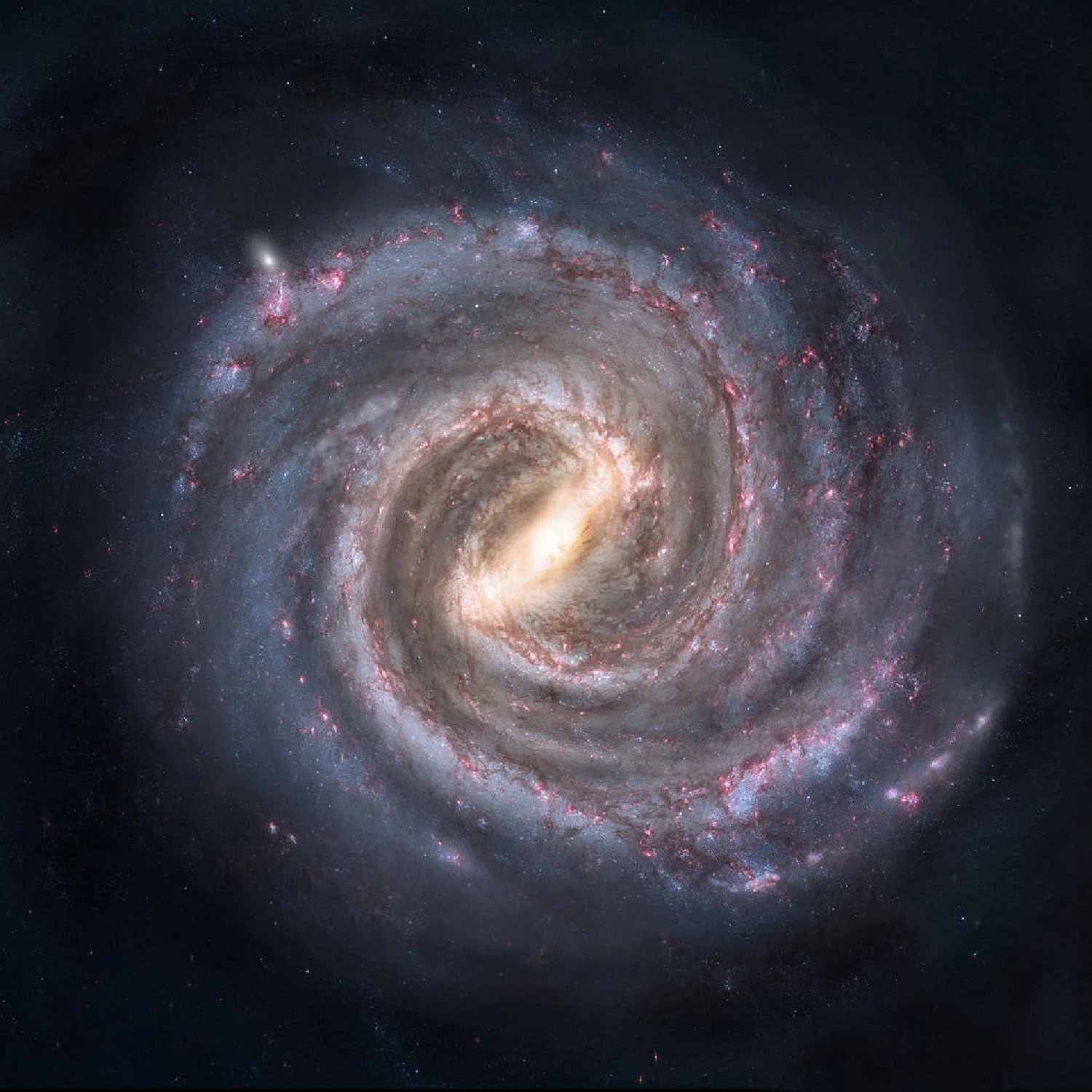
Steve Beresford: I was in my first year at university when Voyager was passing Neptune, and this motivated me to study astronomy, astrophysics, and planetary geology. This became volcanology and led to a lectureship at Monash University, where I first met you. I am a big believer in major events having a positive influence on unsure minds. I had no intention of doing geology at school, but a few Voyager photos, and here I am.
One of my lecturers was the Chief Scientist of the Apollo landing sites; he was planning the sites based on geology. This sort of moment has a huge effect on an 18-year-old lost in a big city with no plan. Now I realize how unusual it was to have any of these subjects in the first year of university. World-class scientists came to my small country on the far side of the world because we had world-class geology. I was a typical 18-year-old lad whose mind was elsewhere, but in hindsight, this was a special start.
Brett Davis: I know you have a multitude of interests geologically. What are the main ones that you are pursuing now?
Steve Beresford: My current focus is salt basin metallogeny. Evaporites play an outsized role in a diverse range of giant ore deposit genesis, but their preservation, especially in the upper 500 m (1640 ft), is so poor that it requires a multi-disciplinary approach.
Brett Davis: You are a globally acknowledged expert on polymetallic deposits. What are the weirdest and most interesting ones you have worked on, and which one has perplexed you the most?
Steve Beresford: The question that always crosses my mind is, could I discover the supergiants given my knowledge state, and if the answer is no (as it was for Oktyabrsky—the world’s highest-value deposit), then I have some personal learning to do. This sort of enquiry asks me to understand how it was found (I love to research real discovery histories because they are as close to decision-making as we can record) and forge new research paths to solve either my own knowledge gap or, even better, an industry- or academia-wide knowledge gap.
The deposit that perplexes me the most is Munali in Zambia. This is 100% what I look for and do, but the deposit remains small and uneconomic. Either I don’t know something really pivotal, or it’s an unfinished job. I think about this a lot.
Brett Davis: Does Steve Beresford work with a crew of like-minded scientists, or are you a bit of a lone ranger? If the latter, what/whom do you use as a sounding board for your ideas?
Steve Beresford: This is a good question because I don’t have this right. I’m often asked how you become an expert, and the answer is you keep getting asked back, and over time someone else calls you that. This leads to people seeking you out as a lone wolf, but actually, my secret sauce is how I build teams and work with peers. I think the people who work with me know that, but that’s not actually how it always pans out.
I’m a strong extrovert, so I prefer to work with a team. I love working with people who have skills I don’t. I know my weaknesses these days, so I like working with others who complement my skills. Weaknesses are often an extension of strengths, so I’m an advocate for balancing weaknesses through others, not trying to become someone you are not. For example, I like to think I’m a creative person and that is essential to what I do, but that means I follow my curiosity like a magpie chasing a shiny thing. You don’t get the first without the second.
Often, as the most experienced person in the room, you have an outsized say, leading to groupthink. This is dangerous, as all real opportunities come from uncertainty. Opportunity is antithetical to certainty. You need others in uncertain moments. The big regrets and missed discoveries in my career have all been a failure to get others to act.

Brett Davis: Let’s pander to the real geologist here—apart from the aforementioned polymetallic deposits, is there a particular mineral system or commodity type that interests you?
Steve Beresford: I’m a trained igneous petrologist, but I work largely in basins now. This came about through working in sediment-hosted copper deposits with First Quantum in the Copperbelt. Much like Norilsk, these supergiant districts make you wonder why you bother working anywhere else. They are so challenging and yet frustrating. When Kamoa was found in the DRC, it was a humbling moment that makes you realize that just when you think you have control of a mineral system, you actually don’t.
Brett Davis: Leading on from the previous question—everyone has a handful of deposits that have left a mark on them, be it because of the amazing geology, the hideous conditions, the people they worked with, horrendous logistics, etc. Which deposits do you hold dear, and which ones really were difficult to work on?
Steve Beresford: The hardest geology I’ve faced that left a mark was the Enterprise sedimentary Ni deposit in Zambia. This was a new deposit style, a rare moment in history. I was a newly hired Chief Geologist working with a young, smart team. I was experienced but not in these rocks. The team had done an incredible job navigating the rocks that ended up changing some of the fundamentals of not just economic geology but even metamorphic geology. These are moments that make you realize what it was like finding Olympic Dam. Everyone gets regressed to a learner.
I would have gotten nowhere without working in the WMC-Jinchuan alliance at Jinchuan and the BHPB alliance with Norilsk Nickel in Siberia, and specifically at the supergiant of the Norilsk camp, Oktyabrsky. I was involved in the setup and we achieved very little in the end (another topic for another day), but we did learn like few get the opportunity to. You could work your entire life here and still only have the basics. In this respect, it’s like Olympic Dam, the level of complexity makes these stand out from common garden deposits. Russia is also like the Andes for porphyries—the be-all and end-all for the deposit type. I have been fortunate to work in the Kola as well. Australia simply doesn’t have anything like this, and it means many geos aren’t exposed to the next level of deposits like they are in, say, gold.
One of the things I think people don’t notice about WMC’s history is the appetite for firsthand learning about deposits. Reading is not the same as seeing with your own eyes. Academic literature rarely has primary geology these days, so if you want to learn, you have to go. The most common response I get to this statement is ‘I haven’t been lucky enough to do this.’ I see it as the most important development an aspiring explorer needs. See the supergiants even if you have to pay for it yourself. They will change you. Those who think these visits or secondments are junkets are doomed to follow other people into places. The next Norilsk will not be in Russia.
Brett Davis: You have a fascination with the interaction of archaeology and mining/exploration. What has this interest taught you that has helped in your search for new deposits?
Steve Beresford: Archaeology and mineral exploration are very similar at their core, and both have the motivation of finding something from nothing. The opportunity came via serendipity, working in Central Asia where you navigate around Iron Age burial mounds on a daily basis. I realized that a metal like nickel, which wasn’t identified till 1751, was mined in Antiquity, and that ascertaining its provenance would solve a genuine mystery tied to the Ancient Greeks.
The more I look, the more I realize the Ancient Egyptians and Hittites mined nickel–copper deposits, and that the signatures of these mines in the form of artefacts or coins trace the mines that were operated at the time. Sometimes these mines haven’t been rediscovered. I find this not just interesting but seriously motivating.
Brett Davis: Does Steve Beresford have a rock collection? If so, what is the theme, and what are the favorite samples?
Steve Beresford: Yes, I do, and I think all companies should have one as well. In the Renaissance, there were cabinets of wonders, or Wunderkammer, that represented the lessons from exploration. These collections drove the natural sciences. In the modern corporate world, I have worked in the opposite, i.e. paperless offices. The concept that the rock collection remains front and center is a crucial component of exploration. I believe that the move to a digitalized science has improved many things, but we have also lost a few critical pieces along the way. Field notebooks and field sketches for one, and rock collections are the other. Also, let’s throw in cross-sections, which I think play a different role from 3D models. In the end, discoveries are in decline, and the reasons are multifactorial, but we could start by asking, what have we stopped doing that we shouldn’t have?
Many of my rocks are under my house, I’ve given some to the university for teaching, I have a few Pelican cases which I use to run workshops for companies. The latter are what I call my teaching set. I loan out this collection occasionally to CSIRO and other research groups. There is a special set that sits on my desk as ‘motivators’. I have a carbonatite lava from Oldoinyo Lengai that I injected with epoxy when I came down the mountain so that it’s preserved (they alter so quickly). It is a perfect micro pahoehoe lava, a piece of a kimberlite pipe that I literally landed on in a helicopter whilst looking for nickel, a piece of lapis lazuli because that was salt once upon a time, and taxites (a Russian-coined term) galore, which is a rock type/texture that I teach to every geo. This is one of those non-negotiable rocks you have to know in Ni–Cu exploration. That advice and these samples have helped others find ore bodies, and that means more to me than any of my own work. You can’t really read about taxites, you need to be there in the field, or the next best thing, to look at hand samples. This is not a rock type you can mistake; you’ve either seen it or you haven’t. I think the disappearance of company rock collections is a fatal flaw.

The world Norilsk-like is so over-used, but there are some non-negotiable ingredients that start in the field with taxitic gabbros.
Brett Davis: I know you are big on mentoring people. Apart from me, who have been great mentors, or made a significant influence on you, in your professional career?
Steve Beresford: One of the amazing things about joining a company with WMC’s pedigree is that the culture permeates everyone. Culture is an overused word, but it’s many little things, not a top-five list that you copy onto a PowerPoint slide. Those days are gone, but these people have been and still are my mentors.
Some, like Jon Hronsky and Rocky Osborne, have been active mentors. I started my career wanting to learn from both. Nothing has changed. Some have been more mentors by osmosis, by watching, or by mimicry. I believe that most of what you need to learn is tacit, and some knowledge can only be experienced. I know this is frustrating when you seemingly have all the world’s knowledge at your fingertips. Almost everything important I’ve learned was via experience that hadn’t been written down, and most of it still hasn’t.
Many people ask how I make the time to still mentor. It’s not a chore; it’s one of the reasons I do this. I will go a long way out of my way to work with like-minded people. I think we all want this, but we are still treating career progression as a procedural fetish. If I had my way, I would employ all these people into a super team and we would deliver! Mining companies tend to hire roles, not people or teams, like in other industries such as Law. We are making this very hard on ourselves.
Brett Davis: Many people talk about thinking outside the box with exploration, but you are one of the few who do that. Is the exploration industry too conservative, and, if so, what are we missing?
Steve Beresford: We have evolved from a conservative old-school practice, so it’s understandable. Our science is young, but we have been prospecting for thousands of years. I like to frame it like this—we live in two worlds and are transitioning between them. Transitions are messy, and right now we have to live in both worlds. You can still make smaller or large discoveries in remote or high-altitude places, but we increasingly need to become a high-end, innovative new science. These two worlds require overlapping but still different skills and training.
We ask why our science is declining among the youth without looking hard in the mirror. Yes, a lot of lay people don’t understand the importance of minerals, but we also behave as if the discovery and mining of metals for society hasn’t become a technical challenge that needs the best and brightest. We can’t complain about our declining position in society in one breath and continue to solve problems like a laggard. We now have to claw back respect slowly, and that involves more than constantly repeating that minerals are important to society. The Soviet Union put their exploration geologists on stamps alongside cosmonauts. That’s laughable to my kids today, but this reflects a serious underlying issue—discoveries were a challenge, and we needed special people to do incredible things and create enormous value for our nations.
One view is that we as geologists deserved this, but the alternative one is that we have allowed people who don’t know anything about creating value under uncertainty to tell us how to do our job. I see this as a failure of courage, but it is understandable given that exploration geologists are the first to lose their jobs in busts, and we bear the scars from the cycles. A lack of vision has led to this. There are always consequences, just not always on your time frame. The accused are long gone by the time the system breaks.
The discovery rate is declining, and the challenge is getting harder. If you aren’t actually innovating and thinking outside the box, then you are part of the problem. What part of the magnitude of the challenge don’t you understand? Usually, I’m told that it costs to innovate. Innovation is a way, a value set, an attitude to solving problems. It doesn’t need to be written on a PowerPoint slide in size 30 font with costs. It should be obvious in every sentence. I create new tools every day, some cost dollars, but not thousands of dollars. If they fail, most of you will never see them. Do these add up to be bigger steps than developing one major technique? Of course they do, and by a long way.
Brett Davis: You have a very high profile at the professional level, from your roles in exploration and mining through to your contributions to conferences, workshops, discussions, etc. What is Steve Beresford’s secret to time management?
Steve Beresford: I’m a very inefficient person, but I’ve learned to remove things from my life. I say yes too often, but I know if I add something to my life, I have to delete something. I think I’m terrible at this, and no one likes it when you delete something, e.g. leave a job or pull out of a project, but sometimes you simply have to.
Let me put the question back to you or the readers. What would you delete from your day if you could? Don’t answer ‘admin’, because that’s a real component of most jobs and getting things done. My answer is pointless, but still measurable work. Work you know can’t go anywhere, you are only doing it because you were asked to tick a box. In my experience, this can become 100% of a job. Let’s mention another one: meetings with no decisions. Decision paralysis is a massive opportunity cost in this business. It’s important to acknowledge that companies don’t set out to waste time in meetings; it’s an unintentional response to the real challenge of the uncertainty of our job. We solve for uncertainty, so by the time mining nears, much of the uncertainty has gone. Those who work at the mining end may laugh because every step is about reducing uncertainty, but exploration geos are the ones who lead the charge on reducing the uncertainty. Remember, we start from nothing. I’ve mentored many geos in my time, and it’s not uncommon for the majority to find this paralyzing and find themselves unsuited for it. There is no judgment. It takes many different types of people to find and develop a mine.
I love to push the science, but almost 100% of my daily issues are behavioral (my own included). Why aren’t we doing x? Fixing this involves scaling trust, truly understanding the difference between what we do and other industries, the natural anxieties of making decisions under very high uncertainty, and the almost unique nature of working in such a low base rate of success. Few give the time to the uniqueness of leading mineral exploration in contrast to even mining. They are wildly different but in the same value chain. I think we have homogenized our businesses too much so it’s easier to run them. We have built Real Madrid, not Paris Saint-Germain!
Brett Davis: In the dim, dark past, I undertook a lot of research into the emplacement of intrusions. As part of this, I investigated salt diapirism and halokinesis, and often wondered about the interactions of intrusions and salt-laden host rocks. More recently, you have posted about targeting salt basins for polymetallic deposits. Can you briefly expand on this concept and the implications of it going forward, given that this seems to be an exploration initiative that has been largely unrecognized/underutilized to date?
Steve Beresford: Halokinesis is a fancy word for salt tectonics, and specifically halite, although sulfates are often a forgotten accidental travel companion. This process is driven by basin loading and the unique thermal and density properties of halite. The word unique is not hyperbolic. There is no other rock we deliberately eat, no other rock that changes its rheology so dramatically depending on its position in the upper crust. The thermal properties of halite are important to this discussion. Loading does drive large-scale lateral and then vertical salt movement, especially on passive margins, but the trigger is often heat, specifically magma intrusion. This leads to another unique property. Magma when it intrudes salts can mix (especially hydrous salts). I call this process halomixis, and the breccias mimic the behavior of mixing with unconsolidated sediment, even though the evaporites are a lithified rock (salt peperites, no pun intended). The keyword in that sentence is rock. This is not possible in any other rock we know of. There are several unique processes tied to magma and salt interaction. The last one is most salts then vanish from the rock record during diagenesis and metamorphism, even anhydrite (which can survive into granulite facies). This is way more than poor preservation, hence the word vanish. I’m far from the first to recognize this, but I am focused on solving the last part. Finding the vanishing salt opens the biggest opportunities.
Brett Davis: Is there a particular industry bugbear or fallacy that maddens you and that you see perpetuated, e.g. in ongoing posts on LinkedIn?
Steve Beresford: Let’s just pile on the same bugbear because it’s front and center in destroying value. An advanced project with a resource is not closer to a mine than greenfields exploration. In fact, they are often the highest-risk option and further away in time and money from a mine. I change my mind daily as to whether everyone knows this and just ignores it because it’s what everyone else is doing, or if some people really believe that an advanced project is closer to being mined? Greenfields is always lower risk than an advanced project, not higher. This is a painful way to run a business. You seem to be making this harder and riskier than it needs to be.
Brett Davis: What fundamental geological skill do you see being underutilized in the mining and exploration industry?
Steve Beresford: I have many I could add to that list, but in the interests of being contrarian, I will go with one that’s not so common. Visualizing ore bodies in your mind. If you can’t visualize or sketch what an ore body looks like before you have found it (not afterwards), then you are already defeated. This is a creative step that some think has no role if you have a pure analytical mindset. A common retort is people thinking it is a waste of time. ‘You can’t possibly be right.’ Correct, I can’t possibly be right, but to nerd out a little on another one of my passions, neuroscience—we don’t see the world as it is. We are Bayesian creatures that use priors, i.e. the brain models its expectation, and then our senses only give us the deviations from that model. Bringing the fork to your mouth is a model, so I mean everything we do is model-driven. The brain sees nothing, yet the image you are seeing right now is created by your brain, not your eyes. The image is demonstrably not what your eyes are seeing. When you play a cricket shot, you are not reacting to the bowled delivery. Your brain is using your experience to model what it expects, and your senses are only inputting the deviations from that model. This isn’t just the visual system. All biological life evolves to operate in its umwelt. Our senses are just what we have evolved to navigate.
What does this detour mean for sketching ore bodies? If you don’t imagine or create the ore body first, then you won’t adjust to the real errors that your senses note. You simply won’t see the literal gorilla walking through the field of view. We like to believe our senses are like video recorders; they are not. In my experience, it is not uncommon for people to find this uncomfortable, i.e. your senses aren’t purely objective, but that doesn’t stop it from being true. There are important implications for creativity, especially when you work on low-probability outcome challenges like mineral exploration. Let’s add another misunderstood idea. The neurotransmitter dopamine is not a response to a positive event but to a positive deviation from your expectations. It is all about anticipation. No model or expectation, no dopamine, no motivation. You will end up in a cave bored, unmotivated and nihilistic. You are being bored to death.
Experience, especially tangible, is so important, and this is linked to why creativity is essential to discovering new things. The old saying ‘don’t be wedded to your model’ is correct, but it’s not the model that is the problem. If you don’t have a model, you won’t start. The real key is how you deviate from that model when reality hits you. To keep going on the cricket analogy. It’s the experience and the millions of balls faced that built up Don Bradman’s batting model. This is what enabled him to react to the deviations from that model. There isn’t enough time to objectively see the whole delivery from the bowler’s arm and react. Listen to a big wave surfer or an F1 driver describing a wave or turn in minute detail. This isn’t literally time slowing down; it’s just that all the attention is on small deviations from the model. It’s about having all the basics so well perfected that you can ignore them and focus on small deviations, much like an experienced person driving a car.
Sketch the ore body before you have found it. I’m not saying put the sketch in the next ASX release, not everything is about other people. This is about you.
Brett Davis: I commonly find that my visits to sites are one in a sequence of several visits by consultants with different skills but at different times. Do you think exploration and mining companies make enough use of the integration of skill sets from the various disciplines? Is there merit in having several consultants on site at the same time to combine findings?
Steve Beresford: The best groups pull together consultants to the same team, not add as isolated disciplines or isolated discrete work. I’ve seen some amazing groups over the years involving multiple consultants from other groups. Oz Minerals at Prominent Hill, Ivanhoe at Oyu Tolgoi, Anglo American at Los Sulfatos, First Quantum at Sentinel. These should be taught as case studies to young geos.
I think integration of disciplines is still a buzzword rather than a raison d’etre. A good example, which we have been saying for 20 years, is geophysics. The industry has forced a business model dominated by external consultants that encourages discrete pieces of work rather than iterative or interactive work with geologists. I don’t allow this to happen in any company I found or join. I would never go anywhere without a geophysicist as part of the team. I don’t know how people explore for massive sulfides without an embedded, iterative, and co-learning geophysicist. ‘We can’t afford to.’ No, you can’t afford not to. Most geophysicists I talk to would agree, but that’s not what’s happening. If you are a major, build teams; if you are a junior, build teams using short-term external expertise. Just build teams. The challenge we face is way beyond even your favorite geologist’s skill set. Discrete work is addition; teams are multiplication.
Brett Davis: Has there been any single satisfying geology-oriented moment in your career that rates above all the others?
Steve Beresford: Let’s choose something a little less obvious than discovery. The first was presenting at the annual WMC conference in Kalgoorlie on Kambalda, i.e. to the guys who wrote the book. The second was presenting on Jinchuan to Tang Zhang Li, its discoverer. Both of these moments changed my career; the first opened so many doors that it’s hard not to think of it as a ‘sliding doors’ moment. I’m a big believer that luck does play a role in opportunities, but you must be ready when they appear. You have to challenge yourself at the highest stage.
Brett Davis: I’ll ask a question on the flipside of the previous one. Many of us have interfaced with less-than-savory individuals or experienced toxic workplaces. Has there been any incident, or have there been any incidents that really disappointed you?
Steve Beresford: I’m afraid the answer to this is too long and bitter. In short, we spend too long getting the wrong people off the bus, and even longer at senior levels, which is more damaging. I’m very fond of one of your previous guests, Scott Halley. I’ve had the privilege to work with Scott, who is an amazing geologist, not just a geochemist, and one of the finest people to work one-on-one with. Scott taught me the value of choosing not to work with toxic people and sticking to my values. Some would say I have left too many jobs on this principle, but in the end, I’ve been fortunate enough to choose values first. I’m very aware that many don’t have this option.
I’m very fond of the difference between aspiration and ambition, which another mutual colleague, Gerard Tripp, helped me learn. I will use my own words: ambition is the role or award itself, e.g. I want to be Chief Geologist. Aspiration is a value state. I want to explore supergiants and be the best geologist I can be. I know the latter will never be completed, but it does keep me pointing forward and learning. This has kept me away from what I call superblockers, people who are unintentionally out to stop discovery. One superblocker is enough to bring the whole place down. Despite all the industry words, I don’t see a lot of focus on teams; we focus on roles that aggregate to teams. There is a huge difference. Has anyone ever seen a team (as opposed to an individual) performance review? I will work for anyone and any company of any size that wants to explore, but my definition of explore includes changing toxic workplaces. This is more than just personal values; a superblocker is a cold, hard, fatal flaw for discovery. You have built in failure already. Aspiration>>>ambition
Brett Davis: What does Steve Beresford do in his downtime?
Steve Beresford: I have teenagers, which is way more challenging than anything I do at work. I’m actually a typical sports fan. I’m a Kiwi, so it’s rugby first, but I’ve become an ice hockey fan over the years working in Finland and Canada. I’m an old-school car guy and love to drive. Manual only. My personal happy place or flow state is driving down winding roads by myself at night or in the rain.
Brett Davis: As you know, this is a favorite standard question of mine. If you had abundant financial funding, is there a fundamentally annoying geology question you’d like to solve or a topic you’d like to work on?
Steve Beresford: I like complexity science as the approach we should be heading for. Let’s start with the axiom that I think large deposits are not just larger versions of smaller deposits. To use some simple metaphors, some are ‘dragon kings,’ i.e. they are deposits that have emergent new processes that scale them. For example, Oktyabrsky is a dry tholeiitic magma that generated a hydrothermal system. This is not common garden behavior like any other nickel sulfide deposit. Other supergiants are like ‘perfect storms’, i.e. the spatial and temporal convergence of two systems. For example, Udokan is a sedimentary copper and magmatic system forming in the same place. The reason I say this is an axiom is because if you disagree (and many do), you will go on a very different scientific and exploration path. I often hear I’m considered a contrarian, but it’s actually a lot simpler—one of my fundamental starting axioms is wildly different from yours. Something as simple as resetting the starting frame of reference, and everything is changed.
People like Bruce Hobbs and Alison Ord have gone this route and published on non-Gaussian probability distributions. Nick Hayward, who has been a mentor of mine, is going his way. I think everyone would say these are baby steps, but this is a far more promising computational path than where most LLMs are going. The two are not mutually exclusive. Complexity systems promise an ability to extrapolate from small data and from high uncertainty, i.e. fits within the real constraints of what discovery is. I fear we are at a divergent moment in computational geoscience, with the popular way leading to more bad movie sequels and prequels, and the other—to new transformative mines of the future. If I were running geoscience for a major again, this is the route I would be going, and aggressively. Both are computational directions. This would be considered contrarian to the rest of the industry, but is the rest of the industry just responding to Silicon Valley? I get accused of being too abstract from time to time, but in the end, everything has to be rooted in philosophy; it’s just about whether you are willing to walk the plank before others follow you.
Brett Davis: Finally, any concluding comments or words of wisdom from someone who is fast becoming an industry veteran?
Steve Beresford: I can remember having a quiet ale or two with you around September 11 at the Archean Symposium. That makes us both old.
Thanks for the opportunity, Brett. It’s always a privilege that someone thinks you have something interesting to say.
For more information: Get in touch with Steve on LinkedIn