I am a geologist of the bush; not a country boy but a city boy who has crawled through the jungles of Laos, Borneo, Irian Jaya, and the Solomon Islands, to name a few. I like looking at outcrops, especially in younger terranes where 2.8 Ga hasn’t destroyed all the texture, followed by 20 Ma of regolith development that has turned the remaining textures into mud in the logging sieve. I have worked in both ancient and relatively modern geological camps and seen petrified Miocene tree stumps in-situ along a riverbank in East Kalimantan and marveled at such youthful terrane. I have also seen preserved pristine pillowed basalts from an Archaean sea that was devoid of life. I guess it’s a matter of degrees.
The job has allowed me to see remote parts of the world and meet ancient cultures where no common language was spoken. In one incident, I met a couple of Irian tribesmen wandering through the jungle. They had never been to school to learn the national language. I don’t think they even knew they were in a country called Indonesia. They looked at me and my field assistant and must have felt sorry for us and gave us their only piece of food wrapped in a leaf. I felt touched that these two near-naked men carrying nothing but a plant fiber string-bag and a spear were offering us their last stock of food. Maybe it was their way of greeting strangers, who knows?
Brett Davis: Firstly, thanks for allowing Coring to interview you, Shaun. We have known each other for a long time, but I can’t recall you mentioning what got you interested in a career in geology. Can you give the readers some insight?
Shaun Richardson: At school, I organized a camping trip with two friends to explore an area where gold had been worked in the late 1800s. We took a gold pan, although none of us knew how to use it. That was my first memory of gold prospecting and my interest in it. My great-great-grandfather was a gold miner operating an alluvial sluicing business and was moderately successful. His picture is on my wall at home. I guess it’s in my blood.
Brett Davis: Were there any genuinely formative moments in your early career and/or people apart from me who truly inspired you?
Shaun Richardson: I always say that you will only meet a few good and talented ‘teachers’ in your lifetime. Even spending a short time with these people is so important to take on board what they can show you. In exploration, and maybe it’s due to time pressures, I have rarely benefited from input from the supervising staff as they are usually caught up in administrative tasks. Release the geologists and let them run into the bush and find stuff. Their time is wasted on rosters, statutory reports, budgets, endless HSEC meetings, etc. Let other seat-warmers take care of the paperwork and let the geos kiss a rock or two.
Brett Davis: You are an old-school geologist and explorationist, you ‘walked the walk’. You’ve done the long stints in isolated exploration camps in foreign countries, run remote exploration campaigns in Australia, worked in FIFO operations, etc. How do you compare the mindsets and conditions of companies and individuals you worked with at the start of your career with those you have most recently interacted with?
Shaun Richardson: The geology modeling and targeting is streets ahead of what it used to be. This is to be expected as the geological sciences benefit from advances. The way I look at it is to look back at projects I worked on (including my thesis) and consider how I would look at that today. Things would be done differently because of our advances in thinking and better technologies (e.g. assaying/geochemistry software).
The term ‘mindset’ invokes a feeling of being in a rut of some kind. Perhaps in the old days, in my experience, it was carrying out your work as required without criticizing your superiors. Now Gen Z are more apt to comment on supervisors’ behaviors because they have far better access to information and are not inhibited by any ‘brow beating’. I like to see the younger team members having sufficient autonomy to run their own programs with minimal supervision. Have faith in your geo!

Brett Davis: One topic we commonly talk about, but rarely put into print, is that of the health hazards of working in different countries and environments. Has your health ever been particularly challenged and, if so, what happened?
Shaun Richardson: Yes. Apart from venomous critters and animals that can eat you, leeches, and foot rot, I guess the real challenge was multiple doses of malaria, both vivax and falciparum. I was lucky. You should walk through a cemetery in a village in Borneo and see the number of little graves. Lots of kids didn’t make it.
Brett Davis: Having worked with you in remote central Australia, I am keenly aware of the value you place on safety. Have there been jobs where you think the safety aspects have been over- or underdone, and can you give examples?
Shaun Richardson: In recent years, not so much underdone but overdone. The bigger companies tend to be worse, as they are very risk-averse and can afford to fly me to a mine site for three days to do an induction that will allow me to walk unescorted the 100 m (328 ft) from the front gate to the shed housing the exploration equipment. I think most companies are, however, doing the right thing.
Brett Davis: One of the key aspects of your previous roles in Australia has been interfacing with Traditional Owners. Very few people have garnered the respect you have both in the remote communities you have worked in and with your colleagues. What skills and personality traits do you consider desirable and undesirable if someone wants to emulate your success?
Shaun Richardson: As I became more involved in organizing heritage surveys and land access, I certainly learned a lot, not only about interacting with Traditional Owners but also with landowners. Recently, after leaving my former position where I had built up a relationship with the Traditional Owners over 14 years, the new incoming company struggled with forming that important bond. The Traditional Owners got so frustrated with the faux pas being committed by the new company that they wrote a five-page procedure that needed to be adhered to by the new people interacting with the Traditional Owners on a heritage survey. The relationship built up is not transferable and must be earned by the new operators.
Working within the Aboriginal groups takes time and there are always challenges. Maintaining respect and having patience are important traits. You must remember that the timetable of the mob doesn’t always match the timetable of the exploration companies.
Brett Davis: I want to piggyback on the previous question and ask what you have learned professionally and personally from working with Traditional Owners and members of remote communities?
Shaun Richardson: I have learned that Aboriginal people have an amazing ability to read you from your body language and demeanor. They have worked you out from the get-go. Professionally, I get frustrated with dealing with the bureaucracy involved in the native title negotiations. I see white fellas in advisory roles to the Aboriginal Corporations whose motivation could be called into question. The black fellas certainly need representation in a legal sense to protect their native title interests, but when you do a heritage survey that costs AUD 200 000 and the Traditional Owners only get 60 000 in their pocket for two weeks of work (say ten people), you can see how it’s been turned into a multi-billion dollar business around the country.
Brett Davis: Do you have a rock collection? If so, what are the favorite items in there and why? If not, why not? Geologists without rock collections are hard to trust!
Shaun Richardson: I do have some prized rocks. Although comparing anybody’s collection to your museum-grade one, Brett, is not fair. I sailed out to the island that popped out of the ocean above where Krakatoa exploded in 1883. My favorite piece is a young andesite from the beach there.
Brett Davis: What is your favorite dinosaur and why?
Shaun Richardson: I guess the ones preserved in the fossil record that show feathers, such as Archaeopteryx. The debate still rages about the feathers and whether some of the big guys had less developed bunches of feathers. Also, there were other guys around on parallel lineages with feathers as well. I like that these guys may have survived the Chicxulub meteorite to go on and become birds.

Brett Davis: Despite your recent roles, I know you are a geologist at heart. Is there a particular mineralization style or deposit type that interests you, and why?
Shaun Richardson: I think that, although I have spent a good part of my career exploring for gold, I am fascinated by how the fluid pathways play an important role in metal deposition. People can start mining deposits without really having a full understanding of how they form. For example, in many cases there is a protracted history of changing stresses that massage a deposit into shape. These histories fascinate me and often are not understood until partway through a mining operation.
Brett Davis: Leading on from the previous question, is there a company, a camp, or an operation that you think of more fondly than others? If so, which one(s) and why?
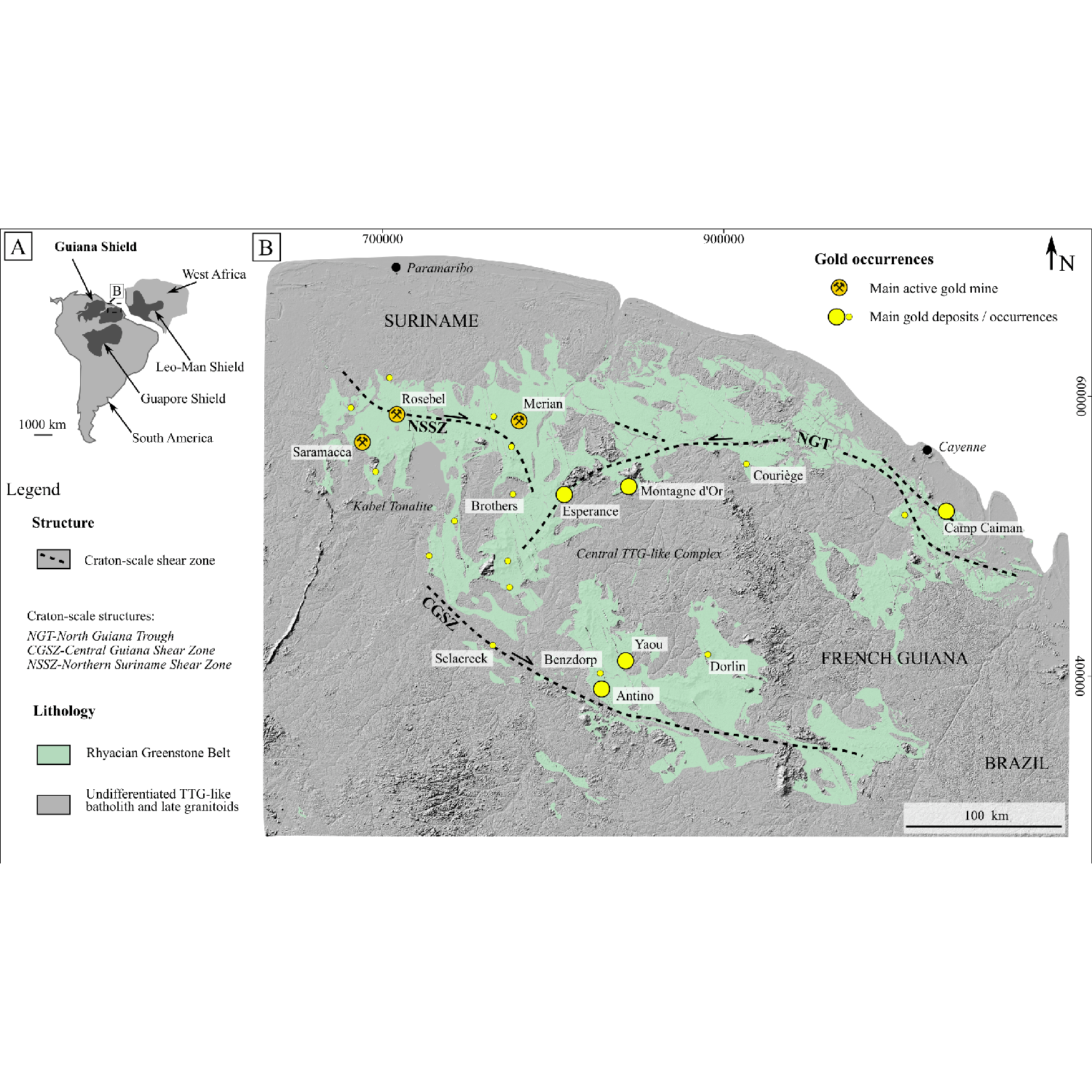
Shaun Richardson: Yes, the Gruyere deposit in the Yamarna Belt of Western Australia. It’s hosted in a tonalite and in a part of the belt that is older than the rest (2.8 Ga). It’s an interesting deposit and has a great future, especially in terms of underground potential. We originally named all the prospects after cheeses (as geologists do) and the name has stuck. Sometimes during the resource drill-out it was called ‘Gray Hair’, because time pressures caused many of us to age prematurely!
Brett Davis: Ok, I’ll ask a series of short-answer questions. What is your favorite type of beer, and do you have a favorite brand? What type of music do you prefer, and do you have a favorite artist? What is your go-to meal if you are eating out?
Shaun Richardson: I like Peroni or Asahi, both are nice and refreshing! My music tastes are wide and varied (from the Rolling Stones to the Crash Test Dummies, from Talking Heads to Enya). Hard to nail down any favorites. The only album that I have bought and loved every song (pretty rare) many years ago was Stop Making Sense by Talking Heads. My go-to meal, if I’m eating in a new place or out in the bush, is a steak. It’s reasonably hard to fuck up.
Brett Davis: What is the most maddeningly common and frustrating thing that you have encountered when trying to progress an exploration project or discussions with stakeholders?
Shaun Richardson: Stakeholders that make access to their property so difficult (citing biosecurity issues) that it becomes impossible to practically carry out the work. This, fortunately, is very rare.
Brett Davis: Has there been any single satisfying moment in your career that rates above all the others?
Shaun Richardson: The discovery of a deposit that turned the company around overnight. The biggest discovery in WA for ten years. We were running out of money. We ended up raising AUD 30 million in two days.
Brett Davis: Have any incidents really disappointed you and affected your career, e.g. lack of support from management when working remotely, co-workers with poor attitudes, etc.?
Shaun Richardson: The only thing that sticks in my mind was the way in which the recent takeover of our company was carried out in an extremely hostile way. Existing paid-for registrations for a gold conference were all canceled by the incoming company. An exercise in bastardly action. You know who you are!
Brett Davis: What has stressed you most in the roles you’ve had over the course of your career? Dealing with people? Technical challenges? Financial constraints? Physical relocation? Long stints in remote camps? Travel? Other?
Shaun Richardson: The early morning flights, leaving home at 3:30 a.m. to get out to the terminal. The long days on an aircore rig in the middle of summer. Poor communications between head office and the field teams. The creation of working blocks of mates in one team that control logistics and create problems for the rest of the crew, etc., etc., etc…
Brett Davis: Having worked remotely, what fundamental things do you think a remote camp should have in terms of people, procedures, and equipment/infrastructure?
Shaun Richardson: These days, with satellite services such as Starlink making it easy, communications is the most important thing, with all the field crew able to spend time accessing this service. Good food is important, and in bigger deployments a cook should be used who can run the camp and look after logistics for the field team. Some operations expect teams to camp out in summer heat in swags and tents. This is not about being a tough bushie but is a health and safety issue with lack of sleep liable to impact safe working.
Brett Davis: This is a standard question of mine… If you have abundant financial funding, is there a fundamentally annoying question or problem you’d like to solve or a topic you’d like to work on? It doesn’t have to be about geology!
Shaun Richardson: To allow field teams, especially those on long remote drill programs, to have time later to digest the assay results and fully interpret the data. Many times, I’ve seen teams on a 6:8 roster or whatever, rotating in and out of programs, not being allocated enough time to validate the results. They come back from break and are sent straight into the field. The programs are geochemically centric, and if there is no anomalous gold, then you move on. There may be other geochemical indicators that need to be evaluated, and it takes time to work out what is meaningful. Managers need to allow time for interpretation.
Brett Davis: What is your opinion about people and companies ‘giving back’ to the industry, e.g. in terms of mentorship? Do you think we see enough of it?
Shaun Richardson: In my last position, we visited schools as part of the GIC program to educate children about the mining and exploration industry. It’s important to do this to share knowledge with potential stakeholders and help the future of our industry. You would be surprised to see what misconceptions people have about exploration and mining activities.
Brett Davis: Now to a personal question. What does Shaun Richardson do when he isn’t thinking about rocks? I know you are a caravan aficionado!
Shaun Richardson: I bought a caravan to eventually travel around Australia. I have been away for a few trips and have enjoyed it. I was no stranger to living in caravans while I was working in the field.
I have a good book collection (nothing like your library, Brett!) and need to spend less time buying books and should start reading them!
Brett Davis: Finally, any concluding comments or words of wisdom from a geology veteran?
Shaun Richardson: It’s been a great ride, and if I had my time again, I wouldn’t change a thing!
For more information: Get in touch with Shaun on LinkedIn