by Richard Fink, former Vice President – Technical (retired),
Global Ferroalloys at Cliffs Natural Resources
Issue 32 of Coring Magazine contained an insightful interview with Steve Beresford. In response to a question about a particular industry bugbear or fallacy, he responded:
‘An advanced project with a resource is not closer to a mine than greenfields exploration. In fact, they are often the highest-risk option and further away in time and money from a mine. I change my mind daily as to whether everyone knows this and just ignores it because it’s what everyone else is doing, or if some people really believe that an advanced project is closer to being mined?’
My answer to this question, based on 46 years of industry experience, is that most mining executives firmly believe an advanced project is always better than a greenfield one. The following tale is one example of this mentality.
The ‘super-cycle’, the one that was hyped as a ‘paradigm shift’ and the new reality for commodities, came to a crashing halt around 2011. However, the Global Financial Crisis (GFC) of 2007–2008 mortally wounded many large mining acquisitions and presaged this fin de siècle. The super-cycle was driven by hubris, absurdly inflating asset values, irrational exuberance, growth at all costs, fear of missing out (FOMO), and cursory due diligence followed by accelerated project (mis)management. Like cherry on an ice cream sundae, this was all capped by rampant disregard for shareholder interests cheered on by bankers, analysts, and deluded investors. While this is the tale of one megaproject acquisition that inexorably plodded to closure as the world economy collapsed in 2008, it is not intended to be a cautionary story, or to even have a moral. After riding through numerous booms and busts during my mining career, it is clear that the industry does not learn from experience or past mistakes, and that similar types of stories are destined to play out during the next commodity boom.

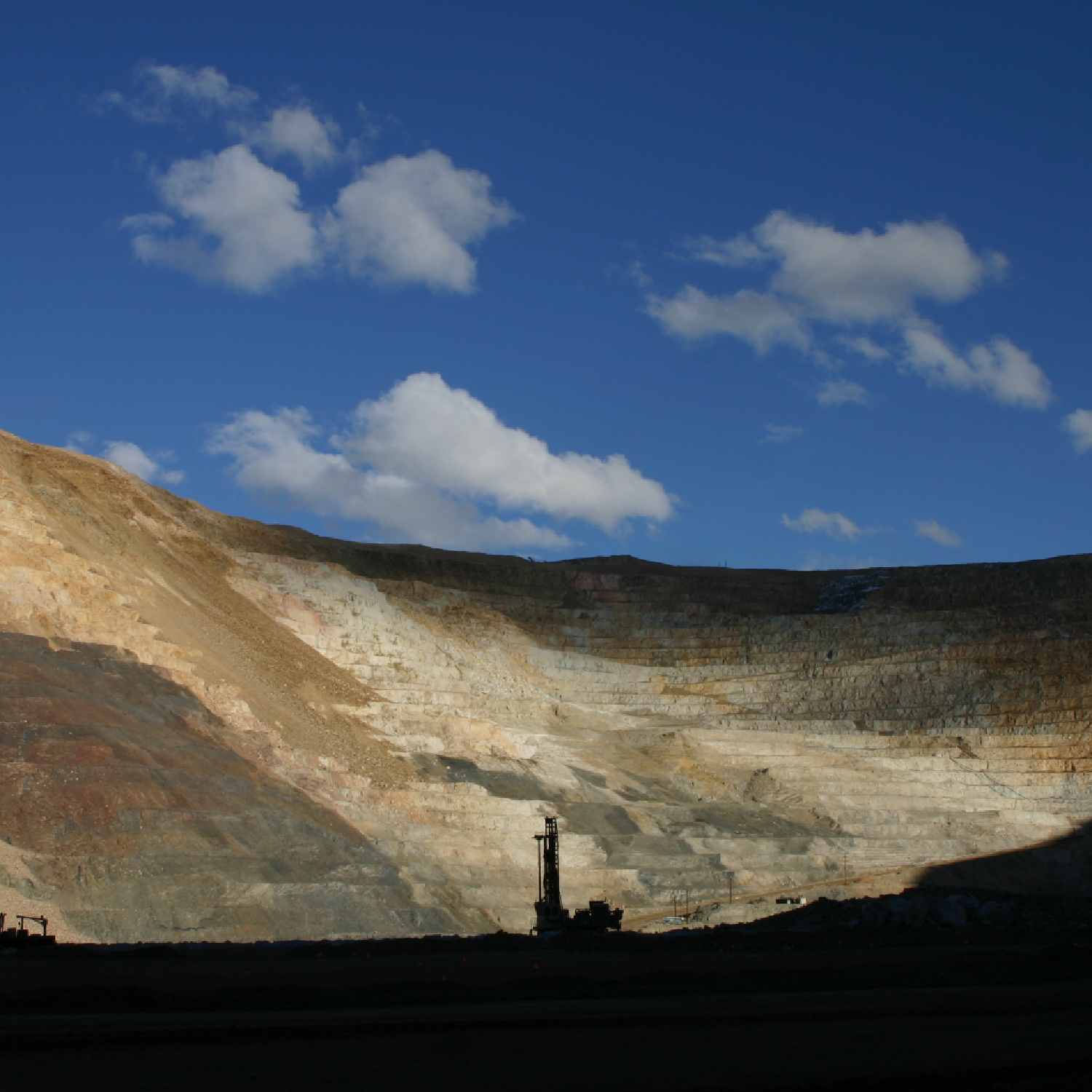
I took this photo of the impressive Casa de Pedra (Stone House) iron ore mine in the summer of 2008. Casa de Pedra is a world-class deposit located about 55 km (34 mi) south of Belo Horizonte, near the southwestern corner of the famous Quadrilátero Ferrífero, Minas Gerais, Brazil. It is within the Cauê Itabirite of the Minas Supergroup, Itabira Formation. It has been operated by Companhia Siderúrgica Nacional (CSN) since 1947, and mining is believed to have begun over 100 years ago. Production capacity at the time was approximately 13 Mtpa of lump ore and sinter feed. I was part of a due diligence exercise to evaluate friable and siliceous itabirites (sharp outcrops in the photo foreground) as source rocks for pellet plant feed. Itabirite is a Brazilian term for metamorphosed iron formation composed of iron oxides (mainly hematite and martite, minor magnetite), quartz, and rarely mica. It is generally schistose but may be compact.
CSN was proposing a complex ‘paper’ project, an iron ore megaproject called Nacional Minérios (Namisa). It would increase production about fourfold by combining disparate resources, reserves, and tailings from mining complexes spread over a wide area, adding concentrating and pelletizing facilities and upgrading logistics; all folded into a cumbersome business structure. CSN valued the project at about USD 8 to 10 billion, with an estimated CapEx requirement of approximately USD 15 billion over the next 5–7 years to realize project objectives. CSN was looking to sell off a portion of the project as a great way to pay down their debt.
Namisa was a bold, audacious, visionary project; a potential company-builder. The investment bankers estimated sky-high EBITDA values, and mining companies and consortia from around the world clamored to get in on the bidding. Of course, the scope and schedule for the project were quite insane, but nobody seemed to care. Reducing the scope along with better phasing could have resulted in an excellent project, but the mantra of the time was ‘go big or go home’.
In addition to project red flags (e.g. scheduling and execution, high capital costs, high failure rate of megaprojects, and a host of known unknowns), the bright economic promise of Brazil from the start of the century had begun to tarnish, the GFC dominoes had begun to fall as early as July of 2007 (although mainly in the US), and ROI depended upon iron ore prices remaining at historic highs.
We declined to bid. Even being pushed by senior management, I could only come up with a USD 2 billion price tag with lots of associated risk. However, a consortium of Japanese trading houses led by Itochu did close on the purchase of a 40% stake in this project for USD 3.1 billion in October 2008. I have no idea what possessed the preternaturally astute and analytical Japanese to complete this deal after the Lehman Brothers collapse in September, which opened the floodgates for the GFC. Several other deals in the mining and metals industries cratered at that time due to volatile market conditions and the plummeting world economy.
CSN did a brilliant job of using the super-cycle to leverage under-performing assets and monetize them at multiples of their intrinsic value. Unfortunately, CSN appears to have also believed in the project and took on the leadership role. As one would expect, project execution foundered on the rocks of reality, but that tale of woe is for another to tell.
P.S. I could never get the company to go for two modest, attractive greenfield projects in the region. I guess my years of experience never made me a great salesman!
For more information: Get in touch with Richard on LinkedIn
Read Richard’s article on Beer and geology on p. 44 in Issue 32 of Coring Magazine, or here.